Does Teeth Scaling Damage Teeth? The Medical Truth Explained
Does scaling and tartar removal weaken teeth or cause gaps and sensitivity? Get the medical facts, the benefits of teeth cleaning and when you need it, with Aman Dental Centers in Mansoura.
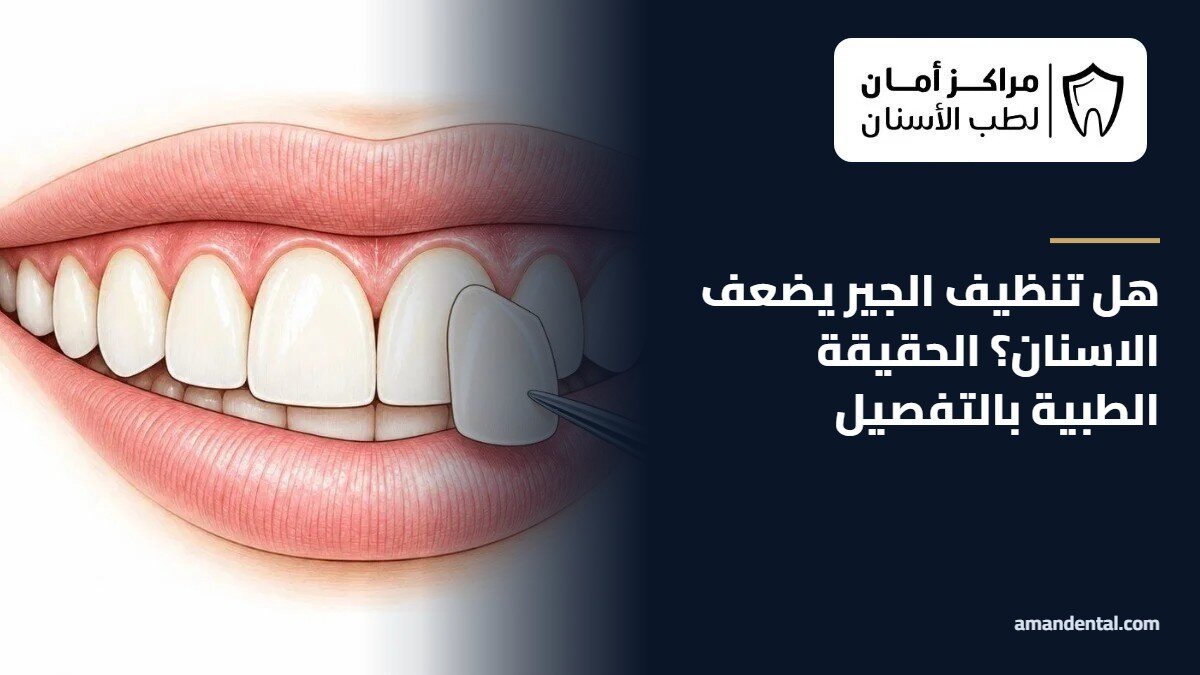
Many people hesitate to get their teeth scaled because they have heard it "eats away the enamel", "loosens the teeth" or leaves gaps between them. So the question keeps coming up: does teeth scaling damage teeth? At Aman Dental Center in Mansoura, we answer this question every day, and the clear scientific answer is no: proper scaling does not weaken your teeth, it protects them. In this article, we explain why some people believe the answer to does teeth scaling damage teeth is yes, what actually happens during a cleaning, and how to handle the temporary sensations afterwards.
What Is Tartar and Why Must It Be Removed?
Tartar (calculus) is a bacterial layer (plaque) that has hardened with minerals from saliva, so it sticks firmly to the teeth and below the gum line. Once hardened, it cannot be removed with a toothbrush, and it becomes an ideal environment for bacteria that cause:
- Gum inflammation and bleeding. Read about the causes of gum disease.
- Pockets around the teeth and loss of supporting bone. Read about periodontal pockets.
- Bad breath.
- Loose teeth and tooth loss in advanced cases.
Learn about the types of dental tartar.
Does Teeth Scaling Really Damage Teeth?
The short answer to does teeth scaling damage teeth is no. Modern ultrasonic scalers break up hardened tartar and separate it from the tooth surface without removing or weakening the enamel. Enamel is the hardest substance in the human body, and the scaler is designed to deal with tartar, which is much softer.
Why Do Some People Feel Their Teeth Are Weaker After Scaling?
1. Gaps Appearing Between Teeth
Built-up tartar was filling the spaces between the teeth and covering gum recession. When it is removed, these gaps, which already existed under the tartar, become visible. The cleaning did not create them; it revealed them.
2. Temporary Sensitivity
Tartar was covering parts of exposed roots. Once removed, these areas are exposed to hot and cold, causing sensitivity that usually fades within a few days to two weeks.
3. A Feeling That Teeth Are Moving
In advanced cases, tartar acted like a "splint" holding loose teeth together. Removing it reveals the real looseness caused by gum disease, not by the cleaning. With gum treatment and healing, the situation usually improves.
4. Slight Gum Bleeding
Inflamed gums bleed easily during cleaning and for a day or two afterwards, then improve and return to a healthy pink color.
These reasons explain why the misconception around does teeth scaling damage teeth is so widespread, when in fact the problem existed before the cleaning.
When Can Scaling Cause Harm?
Harm only happens with misuse, such as cleaning with unsuitable instruments, too aggressively or far more often than necessary, or using acidic or abrasive home remedies to remove tartar. That is why scaling should be done at a specialist clinic. Beware of tooth enamel erosion caused by the wrong remedies.
Benefits of Regular Teeth Scaling
- Stops gum inflammation and bleeding.
- Prevents bone loss and loose teeth.
- Gets rid of bad breath.
- Cleaner, brighter teeth. Learn about teeth polishing.
- Early detection of decay and other problems during the exam.
- Better success for other treatments such as implants, braces and crowns.
How to Handle Sensitivity After Scaling
- Use a toothpaste for sensitive teeth for two weeks.
- Temporarily avoid very cold or very hot drinks.
- Use a soft brush and gentle strokes.
- Ask your dentist to apply fluoride after the cleaning if you already have sensitivity.
How Often Should You Get Your Teeth Scaled?
Most people are advised to have a cleaning every 6 months. Smokers, people with diabetes, and those with gum disease, braces or implants may need a cleaning every 3 to 4 months, depending on the dentist's assessment. If you are worried about pain, read does teeth cleaning need anesthesia? and for prices see teeth cleaning cost.
Teeth Scaling at Aman Dental Centers
At Aman Dental Centers, we use ultrasonic scalers and professional polishing, with a full gum health assessment at every visit. Learn about our dental scaling service and gum treatment.
What Happens During a Scaling Session?
- Initial exam: to assess the amount of tartar and the condition of the gums.
- Ultrasonic tartar removal: with a water spray to cool the teeth and wash away debris.
- Precise hand scaling: for tight areas between the teeth and under the gums.
- Polishing: with a special paste to remove surface stains and leave a smooth surface that resists plaque.
- Fluoride: when needed, to strengthen enamel and reduce sensitivity.
When patients see these steps, they realize the answer to does teeth scaling damage teeth is no: the scaler targets tartar, not enamel, and polishing leaves a smoother, better-protected surface.
Is Scaling Safe During Pregnancy and for Older Adults?
Yes, and it is especially important for both. Pregnant women are more prone to gum inflammation because of hormones, and scaling is safe, especially in the second trimester. Older adults are more prone to gum recession and root decay, and regular cleaning protects the teeth they have left. In both cases, the answer to does teeth scaling damage teeth is the same: cleaning is protection, not harm.
Common Myths About Teeth Scaling
- "Scaling makes teeth fall out": what makes teeth fall out is the gum disease caused by tartar.
- "Baking soda removes tartar": it may remove surface stains, but overuse scratches the enamel and does not remove hardened tartar.
- "Once in a lifetime is enough": tartar forms constantly, so cleaning needs to be repeated regularly.
Correcting these myths settles the debate over does teeth scaling damage teeth and encourages regular care. Also read bleeding gums: causes and treatment.
Does Scaling Damage Implants or Crowns?
People with implants and crowns also ask: does teeth scaling damage teeth that are implanted, or scratch crowns? The answer is that the dentist uses special instruments and tips for implants that do not scratch their surface, and regular cleaning is essential to protect them from inflammation around them. Read about dental implant failure.
Does Scaling Damage Front Teeth?
The lower front teeth are where tartar builds up most, because they are close to the salivary glands. After cleaning, patients may feel they have become "thin" or have gaps between them, but this is a temporary sensation after removing a thick layer of tartar. So the answer to does teeth scaling damage teeth at the front is also no.
Scaling and Sensitive Teeth
If your teeth are already sensitive, tell your dentist before starting. They can adjust the scaler's power, use a local anesthetic or a soothing gel, and apply desensitizing agents after the cleaning.
Preventing Tartar Build-Up
- Brush twice a day for two minutes with a fluoride toothpaste.
- Floss or use an interdental brush every day.
- Cut down on sugar and soft drinks.
- Quit smoking, which speeds up tartar build-up and stains it.
- Drink water regularly after meals.
The less tartar you have, the quicker and more comfortable your cleanings will be, and the less you will worry about does teeth scaling damage teeth.
A Brief Medical Opinion
Scientifically, there is no evidence that regular professional cleaning weakens teeth or enamel. On the contrary, evidence shows that neglected tartar is the leading cause of gum disease and tooth loss in adults. So when someone asks does teeth scaling damage teeth, the most accurate answer is: scaling protects teeth, and tartar is what weakens them. If you are still unsure whether teeth scaling damages teeth in your particular case, ask your dentist to check your gums and measure the pockets before and after the cleaning so you can see the difference for yourself.
Conclusion
If you are wondering does teeth scaling damage teeth, the scientific answer is no. Leaving tartar in place is what weakens the gums and bone and puts your teeth at risk. Temporary sensitivity and gaps are not damage; they reveal a problem that was hidden. Book your regular cleaning at Aman Dental Centers in Mansoura, and the Aman team will take safe care of your teeth and gums.
This information is for general health education and does not replace an in-person dental examination.