Dental Implant Success Rate: The Real Numbers and What Affects Them
What is the real dental implant success rate? Learn which factors raise or lower it and how to make sure your implant succeeds, with Aman Dental Centers in Mansoura.
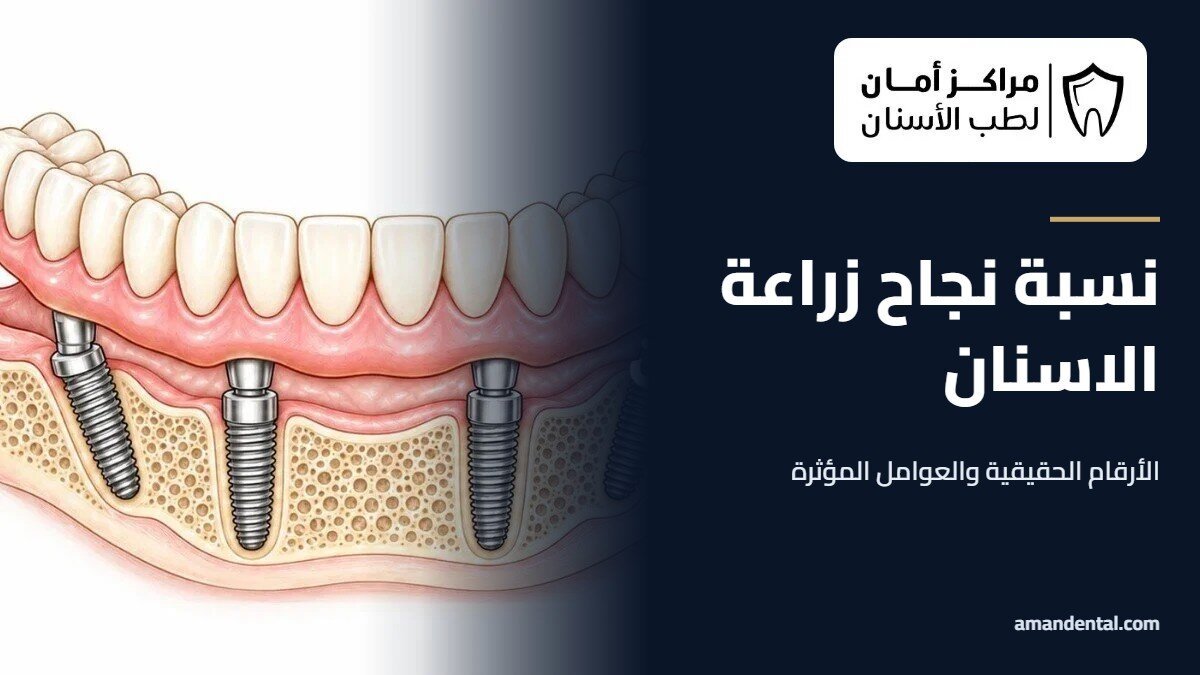
Before deciding on an implant, the first question on any patient's mind is: will it work? And will I pay a large amount only to lose the implant later? The good news is that the dental implant success rate is one of the highest of all dental procedures. At Aman Dental Center in Mansoura, we explain to every patient the factors that determine the dental implant success rate in their particular case, because the general figure alone is not enough. In this article, we explain the real numbers, what improves the chances of success, what threatens them, and how to keep your implant for many years.
What Is the Dental Implant Success Rate?
Long-term scientific studies show that the dental implant success rate ranges from 95% to 98% over the first 10 years in healthy patients who maintain good oral hygiene. The rate is usually slightly higher in the lower jaw than the upper jaw, because the lower jawbone is denser.
Success here means not only that the implant stays in place, but that it is stable, free of pain or inflammation, with very limited bone loss around it, and that it works efficiently for chewing and speaking. For the basics, read what are dental implants?
Factors That Raise the Dental Implant Success Rate
1. Bone Quality and Quantity
The denser and more sufficient the bone, the stronger the implant's fusion with it (osseointegration). That is why the dental implant success rate depends heavily on a CBCT scan before surgery to assess the bone precisely.
2. Dentist Experience and Digital Planning
Choosing the right position, angle and length for the implant, and avoiding nerves and the sinuses, all require experience. Digital planning and a surgical guide clearly reduce the margin of error.
3. Implant Type and Quality
Implants from well-known international brands with modern treated surfaces achieve faster, more stable osseointegration. Learn about German dental implant brands and the different types of dental implants.
4. Sterilization and Clinical Environment
Infection in the first weeks is one of the main causes of early failure, so strict sterilization is key to raising the dental implant success rate.
5. Following Instructions
Sticking to soft food at first, the prescribed medicines, follow-up appointments and daily oral care. See dental implant aftercare.
Factors That Can Lower the Dental Implant Success Rate
- Smoking: reduces blood flow to the gums and bone and can noticeably lower the dental implant success rate compared with non-smokers.
- Uncontrolled diabetes: slows healing and increases the risk of infection. Controlled diabetes usually does not rule out implants. Read about dental implants for diabetics.
- Untreated gum disease: the bacteria behind gum disease can attack the tissue around the implant, so we treat the gums first. Learn more about gum treatment.
- Teeth grinding (bruxism): excess pressure at night can overload the implant, but it can be controlled with a night guard.
- Certain medications and treatments: such as injectable osteoporosis drugs or radiotherapy to the head and neck, which need special assessment.
- Poor oral hygiene: leads to inflammation around the implant (peri-implantitis), the most common cause of late failure.
Early vs. Late Implant Failure
To understand the dental implant success rate more precisely, it helps to distinguish between two types of failure:
- Early failure: happens in the first months before osseointegration is complete, usually due to infection, implant movement, weak bone or smoking.
- Late failure: happens years later because of inflammation around the implant, excessive pressure or skipped check-ups.
The good news is that most failures can be predicted and prevented, and a failed implant can usually be replaced after the area heals. To learn more, read about dental implant risks.
Immediate vs. Conventional Implant Success Rate
In well-selected cases, the dental implant success rate for immediate implants (placed right after extraction) is close to that of conventional implants. But not every case suits immediate implants; an active abscess or major bone loss may make waiting the safer option. Read about immediate dental implants cost.
How to Protect Your Implant and Improve Its Chances
- Choose a center that uses CBCT scans and digital planning before implants.
- Tell your dentist honestly about all your conditions and medications.
- Stop smoking at least two weeks before surgery and, if possible, for two months after.
- Follow a soft diet in the first days and avoid chewing on the implant until your dentist allows it.
- Clean around the implant daily with a toothbrush and floss or an interdental brush.
- Keep up dental scaling and check-ups every 6 months.
- Wear a night guard if you grind your teeth.
Why Choose Aman Dental Centers for Implants?
At Aman Dental Centers, we work to raise the dental implant success rate for every patient through a thorough pre-implant assessment, implants from trusted international brands, strict sterilization and regular follow-up after the restoration. Learn about our dental implant service and see dental implants before and after.
How Does the Dentist Estimate Your Implant Success Rate?
The dentist does not rely on the general figure alone, but estimates your expected dental implant success rate from several indicators: bone density on the CBCT scan, gum health, chronic conditions and habits such as smoking and teeth grinding. During surgery, the dentist measures the implant's "primary stability", an important indicator of good fusion.
After the restoration, the dental implant success rate is tracked in practice through regular exams and X-rays to monitor the bone level around the implant. Very slight bone loss in the first year is normal, but ongoing loss calls for early intervention.
Signs Your Implant Is Successful
- The implant is completely stable with no movement.
- Firm, pink gums around the crown with no bleeding or swelling.
- Comfortable chewing without pain.
- Follow-up X-rays showing a stable bone level.
All these indicators reassure you that your dental implant success rate is heading in the right direction and reveal any problem before it gets worse. If you have weak bone, read about dental implants without bone as an option that improves success without grafting.
Does the Rate Differ Between Front and Back Teeth?
Slightly. Back molars bear greater chewing forces, while upper front teeth may have thinner bone. But with good planning, the dental implant success rate remains high in both, and the deciding factor is the quality of diagnosis and the patient's commitment.
Dental Implant Success Rate in Egypt and Why the Center Matters
The dental implant success rate in Egypt is close to international rates when implants are placed at centers that follow modern standards. But the difference between one center and another can be large in sterilization, implant type and availability of CBCT scans. So do not choose on price alone; ask about these details before you start.
Immediate Dental Implant Success Rate
In carefully selected cases, the dental implant success rate for immediate implants is close to that of delayed implants. Read about same-day dental implants to learn the requirements.
Dental Implant Success Rate with Bone Grafting
When a patient needs a graft, the dental implant success rate remains very high if the graft heals well before the implant is placed, or if grafting and implant placement are done together in simple cases.
Dental Implant Success Rate for Smokers
Smokers are not barred from implants, but they should know their dental implant success rate is lower, and that stopping smoking for long enough before and after surgery clearly improves the result.
Questions to Ask Your Dentist About Your Chances of Success
- Will a CBCT scan be done before the implant?
- What implant brand will be used, where is it made, and is there a warranty?
- Do I need gum treatment first?
- What is the follow-up plan after the restoration?
Clear answers to these questions mean you are dealing with a team that genuinely cares about raising the dental implant success rate in your case, not just completing the procedure.
Conclusion
The dental implant success rate remains very high when accurate diagnosis, the dentist's experience and the patient's commitment come together. Most importantly, understand the factors specific to your case before starting, rather than relying on the general figure. If you are considering implants and want to know your expected dental implant success rate, book your check-up at Aman Dental Centers, and the Aman team will give you a clear treatment plan after the scan and exam.
This information is for general health education and does not replace an in-person dental examination.